What Is a Deadbolt?
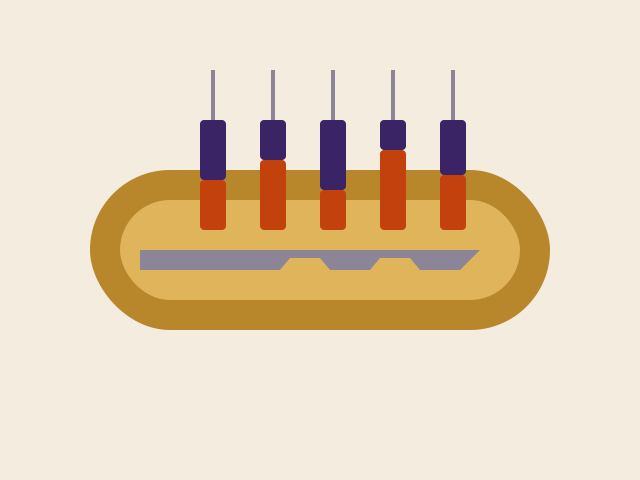
A deadbolt is a lock with a solid bolt that moves only when you turn a key or thumb turn. Unlike the spring latch in a typical doorknob, which has an angled face and can sometimes be pushed back with a thin tool, a deadbolt cannot be forced back by pressure on the bolt itself. When it is fully extended into the door frame, it resists prying and kicking much better than a latch alone.
That is why most security advice for exterior doors starts with the same step: make sure every outside door has a working deadbolt that throws fully into the frame. A bolt that extends about one inch is a common standard.
Single Cylinder vs Double Cylinder
Single cylinder deadbolts have a key cylinder outside and a thumb turn inside. They are the most common choice for homes because anyone inside can unlock the door quickly without a key.
Double cylinder deadbolts need a key on both sides. People sometimes choose them for doors with glass panels nearby, so a burglar cannot break the glass and reach in to turn the thumb turn.
The trade-off is serious. In a fire or other emergency, a double cylinder deadbolt can trap people inside if the key is not right there. Many building and fire codes, including those used in California, generally require that doors used for exiting can be opened from the inside without a key or special knowledge, and rental properties may face specific rules. Check with your local building department or fire authority before installing one. For glass-adjacent doors, alternatives include security film, laminated glass or a keyed-alike setup with a single cylinder lock.
What ANSI/BHMA Grades Mean
Many deadbolts are tested to standards developed by the Builders Hardware Manufacturers Association (BHMA) and accredited by the American National Standards Institute (ANSI). Products are rated by grade based on tests for things like durability, bolt strength and resistance to attack.
- Grade 1: the most demanding tier, often used in commercial buildings and a strong choice for homes.
- Grade 2: a common residential level with good durability.
- Grade 3: the basic tier, meeting minimum requirements.
Look for the grade on the packaging or the manufacturer's specification sheet. Brands such as Schlage, Yale, Mul-T-Lock and ASSA offer deadbolts at various grades, including high-security models with features like pick resistance and restricted keys.
Strike Plates and Longer Screws
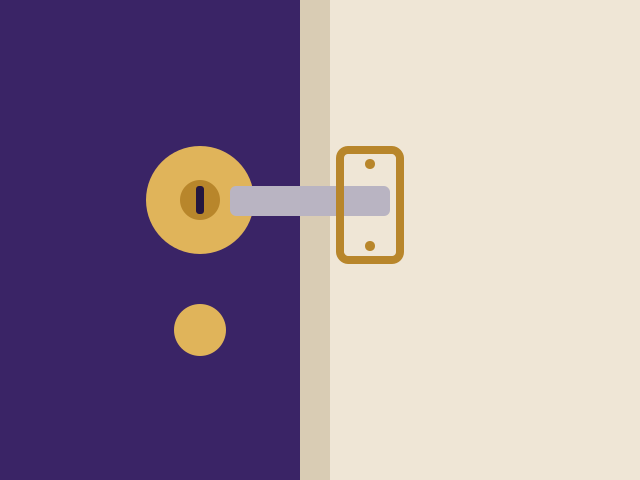
A deadbolt is only as strong as the frame it locks into. In many forced-entry cases, the bolt holds but the door frame splits around it, because the strike plate is fastened with short screws that only reach the thin trim.
The fix is inexpensive. Replace the short screws in the strike plate with longer screws, often around three inches, that reach the wall framing behind the door jamb. A heavy-duty or reinforced strike plate spreads the force over a larger area. Do the same for the hinge screws so the door cannot be forced from that side. These upgrades are one of the most cost-effective improvements you can make.
Installation Basics
- Measure the door. Check door thickness and backset, the distance from the door edge to the center of the lock hole. Common backsets are 2-3/8 and 2-3/4 inches.
- Bore the holes. A new install needs a face bore through the door and an edge bore for the bolt.
- Fit the bolt and cylinder. The bolt goes into the edge bore and the cylinder and thumb turn connect through it.
- Align the strike. The strike hole in the frame must line up so the bolt throws fully without dragging.
- Test it. The key and thumb turn should operate smoothly with the door closed.
If the bolt does not extend fully, the lock may look secure while giving little protection. A residential locksmith can align the door, strike and bolt properly.
When to Upgrade Your Deadbolt
- The key is hard to turn or the bolt sticks.
- The lock is loose or wobbles on the door.
- You moved in and do not know who has keys. Rekeying may be enough if the lock is in good shape.
- Someone tried to break in or the lock shows signs of tampering.
- You want a higher grade, pick-resistant cylinder or keypad deadbolt.
Getting Help With Deadbolts
Locksmith Of Los Angeles is a mobile locksmith dispatched from Los Angeles, CA 90068, and installs, repairs and rekeys deadbolts. Call 310-819-3003 to check availability; you get a quote before work begins. You can also see our guide to common locksmith services or use the contact page.
Frequently asked questions
Is a double cylinder deadbolt legal in California?
It depends on the building and the door. Many codes require exit doors to open from the inside without a key, and rental housing can have extra rules. Because rules vary and can change, check with your local building department or fire authority before installing a double cylinder deadbolt on any door used for exiting.
Can I install a deadbolt myself?
Many homeowners can replace an existing deadbolt with the same size hardware. A new installation needs accurate drilling and strike alignment, and mistakes can leave a bolt that does not throw fully. If the door is metal, has a mortise lock, or needs new holes, a locksmith may be the easier choice.