You can't account for every old key
When you get the keys to a new place, you get the ones the seller or landlord handed over. What you don't get is a list of everyone else who ever had a copy. Over the years a single front door can collect a surprising number of key holders:
- Previous owners and their relatives
- Former tenants and their roommates
- Real estate agents and lockbox users
- Property managers, cleaners and dog walkers
- Contractors, painters and handymen who worked on the house
- Neighbors who were trusted with a spare
Most of those people mean no harm, but keys get lost, copied and passed along. Rekeying is the simplest way to make sure the only working keys are the ones in your hands.
What rekeying actually changes
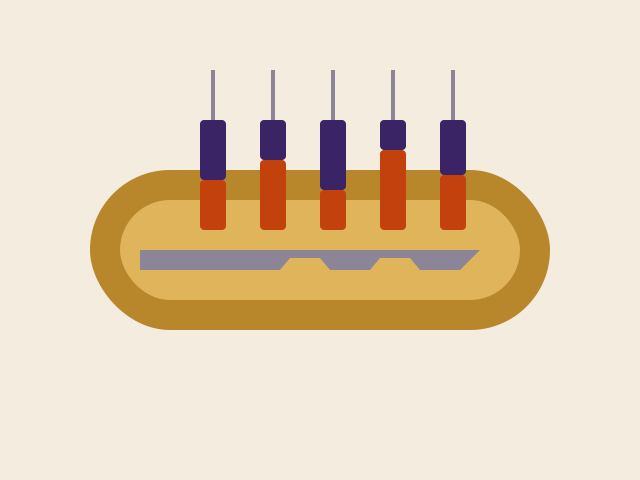
A standard pin-tumbler lock has a set of small spring-loaded pins inside the cylinder. A key works because its cuts lift those pins to exactly the right heights. When a locksmith rekeys a lock, they take the cylinder apart, swap the pins for a new combination and cut new keys to match. The handle, deadbolt and the rest of the hardware stay on your door.
The result is simple: old keys stop turning the lock, and the new keys do. Because the hardware stays, rekeying usually costs less than buying and fitting new locks, and a technician can often do several doors on one visit. If your locks come from compatible brands, they can also be set up so one key opens the front door, back door and garage entry. Rekeying works on most residential cylinders; some high-security and electronic locks need a different process, which a locksmith can explain on site.
When to rekey besides move-in day
Moving is the classic reason, but it isn't the only one. Consider rekeying when:
- Work on the house is finished. If a remodeling crew had keys for weeks, rekeying afterward closes that loop.
- A roommate or partner moves out. Even on good terms, you can't be sure every copy came back.
- Keys are lost or stolen. If a lost key ring had anything with your address on it, act quickly.
- You hired help that no longer works for you. House sitters, nannies and cleaning services all qualify.
For more ideas on keeping a house secure, see our residential locksmith services and our post on choosing deadbolt locks.
Notes for renters and landlords
If you rent in Los Angeles, the locks belong to the property, so don't change or rekey them without permission. Read your lease first; many spell out who handles lock changes. A good approach is to ask the landlord or property manager before move-in whether the locks were rekeyed after the last tenant left. If they weren't, ask them to arrange it. If they say no, offer to pay for it yourself in exchange for written permission, and give them a copy of the new key if the lease requires access.
California also has specific rules about locks in rentals, including requirements for deadbolts on main entry doors and lock-change rights for tenants who are survivors of domestic violence and certain other abuse. If you think those rules apply to you, check with a tenant-rights organization or attorney. Landlords who manage several units may want to look at our commercial locksmith services for turnover rekeying and master key systems.
Rekey or replace: how to decide
Rekeying makes sense when your locks are in good working order and you are happy with how they look and perform. Replacement is usually the better choice when:
- The lock is worn, sticky, loose or physically damaged.
- The hardware is a cheap builder-grade model you want to upgrade.
- You want a sturdier deadbolt, a high-security cylinder or a keypad or smart lock.
- You are changing the style or finish of your door hardware anyway.
A mixed approach is common: rekey the locks that are fine and replace the one that has seen better days. A locksmith can look at each door and tell you which option fits. You can browse typical service categories on our price list page, and you will get a quote before any work starts.
A simple move-in lock plan
- Walk the property and list every exterior lock, including side gates, garage doors and sliding doors.
- Note which locks feel rough or look damaged, since those are candidates for replacement.
- Ask whether the home has an alarm or smart lock with codes that also need resetting.
- Schedule rekeying for move-in day or as close to it as you can.
- Decide how many copies you need and who gets them, and keep a short written record.
- Store one spare somewhere secure, not under the mat or in a fake rock.
Book a rekey in Los Angeles
Locksmith Of Los Angeles is a mobile service dispatched from the 90068 area, and you can check which neighborhoods we cover on our service areas page. Call 310-819-3003 or use our contact page to check availability. Tell us how many doors you have and what kind of locks are on them, and you will get a quote before work begins.
Frequently asked questions
Is rekeying cheaper than replacing locks?
Usually, yes. Rekeying reuses your existing hardware, so you pay mainly for labor and new pins and keys rather than for new locks. The final cost depends on how many cylinders you have and what type they are. Ask for a quote covering every door before the work starts so there are no surprises.
Can I rekey my locks myself?
Rekeying kits exist for some brands, but the work involves taking a cylinder apart and handling very small pins and springs. Mistakes can leave a lock that sticks or doesn't lock at all. Most homeowners find it simpler to have a locksmith do it, especially when several doors or different brands are involved.
Will rekeying work on my smart lock?
Many smart locks have a physical key backup cylinder that can be rekeyed like any other. The electronic side is different: you reset it by deleting old user codes, removing old app users and changing the master code. Check the manufacturer's instructions, or ask a locksmith to walk you through it.